How AI Is Quietly Changing Personalisation in Luxury Commerce
AI-driven personalisation in luxury commerce refers to the use of machine learning systems to adapt digital experiences in real time based on customer behaviour, context, and intent, without compromising brand tone, exclusivity, or control. It is used to improve relevance, timing, and experience flow across digital and physical touchpoints, rather than to automate storytelling or creative direction.
Personalisation in luxury commerce has changed, but not in the loud, attention-seeking way many people expected. There are no dramatic interface overhauls. No obvious moments where customers think, “This must be AI.” And that is exactly the point.
AI is quietly reshaping personalisation. It sits beneath the surface, adjusting experiences in real time, learning from behaviour, and refining relevance without interrupting the sense of calm, control, and intention that luxury customers value.
From visible experiments to invisible intelligence
A few years ago, AI in luxury commerce often showed up as experiments. Chatbots that tried too hard. Recommendation carousels that felt generic. Personalisation tools that were impressive in demos but clumsy in real life.
That phase is largely over.
What is happening now is more subtle and far more powerful. AI has moved out of marketing side projects and into the operational core of digital commerce. It informs decisions continuously rather than appearing as a one-off feature.
This shift matters because luxury brands are not chasing novelty. They are building systems that:
- Operate quietly – Supporting the experience without drawing attention to the technology.
- Learn continuously – Adapting based on behaviour rather than fixed assumptions.
- Optimise in the background – Improving relevance without changing the brand’s outward expression.
The result feels less like experimentation and more like infrastructure.
Luxury v mass market – Artificial intelligence in retail differs
Luxury commerce plays by different rules. Volume is lower. Decisions take longer. Brand perception carries more weight than conversion speed. That changes how AI can be used and where it delivers value.
Mass retail often uses AI to push efficiency at scale. We’re talking faster decisions, aggressive optimisation, and heavy automation.
Luxury brands take a more restrained approach. They use AI to support judgment, not replace it. The goal is not to sell more at any cost. It is to create experiences that feel considered, relevant, and aligned with brand values.
This is why the most effective AI-driven personalisation in luxury is often invisible. Customers do not notice the system. They notice that things feel easier, more relevant, and better timed.
And when that happens without breaking the sense of exclusivity, AI has done its job.
The Old Model of Personalisation (Pre-AI)
Before AI entered the picture, personalisation was planned far in advance. It was tidy, controlled, and it changed slowly. For luxury brands, that felt reassuring. You knew what the experience would look like and that nothing unexpected would happen.
The downside? Customers moved faster than the systems built to serve them.
Static customer segments
Personalisation usually started by placing customers into neat groups. Once someone landed in a segment, that label followed them around for a long time.
Segmentation was typically based on:
- Who the customer was – Location, age range, and general profile.
- What they had done before – Past purchases, frequency, and spend level.
- How the brand viewed them – High-value, occasional, or inactive.
The problem wasn’t that segmentation was wrong. It was that it assumed people behaved consistently. In reality, intent changes quickly. Someone browsing for themselves in October might be shopping for someone else entirely in December, but the experience rarely reflected that shift.
Rule-based logic
Most personalisation worked through rules written by teams, not learned by systems. If a customer did something specific, the platform responded in a predefined way. If they didn’t, nothing happened.
You would see logic like:
- Show this message after three product views.
- Trigger an email when a spend threshold is reached.
- Surface a recommendation once an item is added to the basket.
These rules gave brands confidence. Everything was predictable. Everything could be signed off. But they were also fragile. As soon as behaviour drifted outside the original assumptions, relevance dropped off.
Over time, teams kept adding more rules to fix small gaps. The experience became more complex behind the scenes, without actually feeling smarter to the customer.
Campaign-led personalisation
Personalised luxury shopping was often switched on for campaigns rather than built into the everyday journey. It showed up around launches, seasonal moments, or editorial pushes, then quietly disappeared again.
That created a familiar rhythm: strong personalisation during campaigns, generic experiences in between, and very little continuity from one visit to the next.
For luxury brands used to working around collections and key moments, this felt natural. But from the customer’s point of view, the experience was inconsistent. It adapted occasionally, not continuously.
Where this model started to fall apart
As digital expectations rose, the cracks became harder to ignore.
- Changes took time – Every update required manual work and approval.
- Behaviour was oversimplified – Actions were tracked, but intent was often missed.
- Teams were overloaded – Too much time spent maintaining logic instead of improving the experience.
- Learning came too late – Insights arrived after campaigns ended, not while customers were still deciding.
The old model wasn’t useless. It just wasn’t designed for how people actually behave online now. Luxury customers don’t move in straight lines, and static personalisation was never built to keep up with them.
The New Model: Signal-Based Personalisation Driven by AI
The shift to AI-driven personalisation changes how luxury brands interpret customer intent and adapt experiences in real time.
Modern personalisation no longer relies on who a customer was last season or which box they were placed in months ago. It responds to what they are doing right now, and what that behaviour suggests they might do next.
Instead of working from fixed categories, AI-led systems work from signals. Small, continuous inputs that, when combined, paint a far more accurate picture of intent.
- The key shifts underneath the surface
The change sounds simple, but the impact is significant.
- From segments to signals
Customers are no longer treated as static profiles. Every interaction adds context, and that context can change minute by minute.
- From campaigns to continuous adaptation
Personalisation does not switch on and off. It adjusts constantly, even between visits, without waiting for a campaign window.
- From guesswork to predictive response
Rather than reacting after something happens, AI anticipates the likely next steps and adjusts the experience in advance.
This is less about personalisation as a feature and more about personalisation as behaviour interpretation.
What “signals” actually mean in practice
Signals are not dramatic moments. They are subtle, often unremarkable actions that become powerful when combined. Some are obvious. Others are easy to miss without the right systems in place.
- Browsing behaviour
How someone moves through a site says a lot. Not just which pages they visit, but how they move between pages. Repeated category switching, quick exits, or deep exploration of a specific collection all suggest different levels of intent.
- Product interaction depth
There is a big difference between glancing at a product and studying it.
Signals here include:
- Time spent on product pages
- Interaction with imagery or zoom features
- Engagement with size guides, materials, or care details
These actions help AI distinguish curiosity from genuine consideration.
Frequency and recency
How often someone visits, and how recently, still matters. A customer returning multiple times in a short period is behaving very differently from someone dropping in once every few months.
AI systems track these patterns continuously rather than relying on fixed time windows.
Geo-location and device context
Context changes behaviour. Someone browsing on a mobile device during a commute is in a different mindset than someone exploring on a desktop in the evening. Location, device type, and even time of day all influence how content should be prioritised or paced.
Blending in-store and online signals
For luxury brands, this is where things become especially powerful. AI can connect online behaviour with in-store interactions, creating a more complete view of the customer.
Browsing online after a boutique visit or researching before an in-person appointment becomes part of the same journey rather than separate experiences.
Why does this model feel different to the customer?
The biggest change is not what customers see, but what they don’t notice.
There are fewer jarring moments. Fewer irrelevant recommendations. Less repetition. The experience feels calmer, more intentional, and more aligned with what the customer is trying to do.
Nothing announces itself as “personalised”. It just feels considered, and in luxury, that subtlety makes all the difference.
How AI Personalisation Works in Luxury Commerce
So, let’s dive into how personalisation works in luxury marketing.
1. Signal collection across touchpoints
Customer behaviour is captured across digital and physical environments, including browsing patterns, product interaction depth, visit frequency, and contextual signals such as device or location.
2. Intent interpretation instead of segmentation
AI analyses signals to understand current intent rather than assigning customers to fixed groups, allowing experiences to adapt moment by moment.
3. Guardrail-based decisioning
Personalisation decisions are made within predefined brand boundaries, ensuring tone, pacing, and exclusivity remain consistent.
4. Human oversight and refinement
Teams review outcomes, adjust boundaries, and guide strategy, keeping control over how intelligence is applied.
Where AI Personalisation Actually Operates Today
One of the biggest misconceptions around AI personalisation is that it lives in one place. In reality, it is spread across the experience, quietly influencing decisions that most customers never consciously notice.
It is not announcing itself. It is shaping priority, order, and timing.
Here is where it tends to show up most clearly.
Product recommendations
This is the most familiar use case, but it has evolved far beyond simple “similar items.”
AI-driven recommendations now respond to context. What a customer has browsed recently. How deeply they engaged. Whether they are narrowing down or still exploring. The system adjusts what it surfaces based on intent, not just product similarity.
In luxury, this often means fewer recommendations, not more. Precision matters more than volume.
Homepage content sequencing
For many brands, the homepage no longer has a single fixed order.
AI can subtly reorder content blocks based on signals such as visit frequency, browsing history, or location. A returning customer may see editorial content prioritised, while a first-time visitor is guided more gently through core collections.
Nothing about the page feels different structurally. What changes is the emphasis.
Search result ranking
Search is one of the most powerful and most overlooked personalisation layers. AI can influence which products appear first, even when customers type the same query. Ranking can shift based on past behaviour, popularity signals, availability, or likelihood to convert.
For the customer, it simply feels like the right results appear faster.
Email and CRM triggers
Email personalisation has moved well beyond scheduled campaigns.
AI now supports:
- Triggering messages based on behaviour rather than dates
- Adjusting timing to when someone is most likely to engage
- Suppressing messages when intent appears to drop
The result is fewer emails, but better-timed ones. That restraint is especially important in luxury, where over-communication quickly erodes trust.
Paid media audience refinement
AI also works before customers even reach the site.
Audience models continuously refine who sees which messages, based on engagement patterns and conversion signals. Budgets are allocated more efficiently, and messaging aligns more closely with where someone is in their decision cycle.
This reduces wasted exposure and keeps acquisition activity feeling more relevant.
On-site messaging prioritisation
Prompts, banners, and subtle nudges are no longer static.
AI helps decide which messages deserve attention and which should stay quiet. A delivery reassurance might surface for one customer, while another sees content focused on craftsmanship or exclusivity.
In many cases, the best decision is not to show anything at all.
What ties all of this together , AI personalisation today is less about adding layers and more about removing friction. It decides what matters most in a given moment, then steps back.
When done well, customers do not think about personalisation. They simply feel that the experience makes sense. And in luxury commerce, that quiet alignment is exactly where AI delivers its value.
Examples of AI Personalisation in Luxury Commerce
Let’s take a look at some brands that already provide a luxury digital experience while making the most of AI.
Burberry: Adaptive product discovery and content sequencing

Image Source : Burberry
Burberry has publicly discussed its use of AI-driven personalisation to adjust product visibility and content sequencing across digital touchpoints.
Behavioural signals such as browsing depth, repeat visits, and interaction with editorial content are used to shape what customers see first, supporting longer consideration cycles rather than pushing immediate conversion.
This approach prioritises relevance and brand storytelling over volume-driven optimisation.
Gucci: AI-supported CRM and clienteling
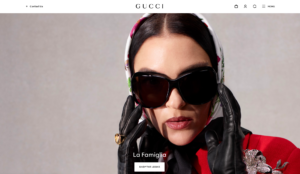
Image Source: Gucci
Gucci has integrated AI into its CRM and clienteling strategy to support more personalised communication across online and boutique environments.
AI is used to help sales associates and digital teams interpret customer preferences and engagement patterns, enabling continuity between in-store interactions and subsequent digital experiences, where consent is in place.
Here, AI supports human judgment rather than replacing it.
Net-a-Porter: Editorial-led personalisation
Net-a-Porter applies AI to personalise editorial content, product recommendations, and email communication based on customer engagement patterns. Rather than relying purely on transactional data, the platform uses behavioural signals to align customers with relevant stories, edits, and curated selections.
This reinforces the brand’s editorial-first approach while maintaining personal relevance at scale.
Louis Vuitton: Cross-channel experience continuity
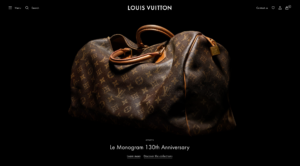
Image Source: Louis Vuitton
Louis Vuitton has invested in AI-enabled systems that support consistency across physical and digital experiences.
AI is used to help align online browsing behaviour with in-store interactions, allowing customers to continue exploring categories or collections they have previously engaged with, without restarting the journey.
The emphasis is on continuity and discretion rather than overt personalisation.
Why Luxury Commerce Requires a Different AI Model
Luxury does not behave like most online retail, and that difference matters when AI enters the picture. The mechanics underneath the business are simply not the same, so the technology cannot be treated the same either.
What works at scale for mass-market brands often feels clumsy or overly aggressive in a luxury environment.
Fewer transactions, different signals
Luxury brands sell fewer items. That is not a weakness, but it does change how data should be read.
With fewer purchases happening, AI cannot rely on constant conversion feedback to learn. It has to pay closer attention to softer signals. Browsing patterns. Repeat visits. Time spent considering a product.
In other words, it has to listen more carefully.
Why Luxury Commerce Requires a Different AI Model
Luxury does not behave like most online retail, and that difference matters when AI enters the picture. The mechanics underneath the business are simply not the same, so the technology cannot be treated the same either.
What works at scale for mass-market brands often feels clumsy or overly aggressive in a luxury environment.
Fewer transactions, different signals
Luxury brands sell fewer items. That is not a weakness, but it does change how data should be read.
With fewer purchases happening, AI cannot rely on constant conversion feedback to learn. It has to pay closer attention to softer signals. Browsing patterns. Repeat visits. Time spent considering a product.
In other words, it has to listen more carefully.
Higher order values raise expectations
When someone is spending a significant amount of money, the tolerance for missteps drops sharply.
An irrelevant recommendation or a badly timed message stands out far more than it would in lower-value retail. It creates friction at a moment where the customer expects confidence and reassurance.
This pushes AI towards being selective. Doing less, but doing it well.
Longer decision cycles change the rhythm
Luxury purchases rarely happen in a single visit. People think. They leave. They come back. Sometimes several times.
AI systems need to be comfortable with that pause. Silence does not mean disinterest. It often means consideration.
Models designed to push quick conversions can misread this behaviour and intervene too early, breaking the flow rather than supporting it.
Brand sensitivity limits automation
Luxury brands are carefully constructed. Tone, pacing, and presentation are rarely left to chance.
That makes full automation risky. AI still has a role, but it operates within tighter guardrails. It supports decisions instead of making them outright.
The goal is consistency, not constant optimisation.
Privacy expectations are higher
Discretion matters more in luxury than in most categories.
Customers are often more aware of how their data is used, and less forgiving when personalisation feels too obvious. Subtlety is not just preferred, it is expected.
That shapes how AI is deployed. Heavier reliance on first-party data. Clear consent. Fewer moments where the system feels like it knows too much.
The takeaway
Luxury AI is not about speed or scale. It is about judgment, timing, and restraint.
When those qualities are built into the model, AI enhances the experience quietly. When they are not, it becomes visible for all the wrong reasons.
Common Mistakes Luxury Brands Make with AI Personalisation
Over-automating tone-sensitive moments
Allowing AI to control language or messaging hierarchy can quickly erode the considered tone that luxury customers expect.
Treating AI as a campaign tool
Using personalisation only around launches or seasonal moments limits its value and creates inconsistent experiences.
Optimising for speed instead of confidence
Pushing faster decisions ignores the longer consideration cycles typical of luxury purchases.
Making personalisation too visible
When customers can clearly see the mechanics of personalisation, it starts to feel intrusive rather than supportive.
Applying mass-retail logic to luxury journeys
Models designed for high-volume commerce often misread luxury intent and apply pressure at the wrong time.
Personalisation vs Brand Control: The New Balance
The balance between personalisation and brand control becomes critical in luxury environments.
Personalisation promises relevance and efficiency. Luxury demands restraint, consistency, and a strong point of view. When those forces collide, brands have to make careful choices about how much control they are willing to hand over.
Why full automation is risky in luxury
In many categories, full automation is the goal. In luxury, it is usually the risk.
When AI is allowed to optimise everything freely, it tends to chase short-term signals. Clicks. Engagement spikes. Faster conversions. Those signals are not always aligned with long-term brand value.
A few common problems show up quickly:
- Tone drift – Messaging starts to feel functional rather than considered.
- Overexposure – Customers see too much, too often, too obviously.
- Context loss – The system prioritises efficiency over atmosphere or pacing.
None of these break the experience outright. But together, they slowly erode what makes a luxury brand feel distinct.
The rise of hybrid personalisation models
Most luxury brands are settling into a middle ground.
Instead of choosing between humans and AI, they combine both. People set the direction. AI handles the adaptation.
In practice, this often looks like:
- Human curation – Teams define tone, content boundaries, and what is never automated.
- AI assistance – Systems decide when and where approved elements appear.
- Guardrails, not free rein – Clear limits around language, imagery, and frequency.
This model keeps brand intent intact while still allowing experiences to respond dynamically to behaviour.
Where humans still matter most
AI is excellent at pattern recognition. It is far less reliable in judgment.
Human oversight remains critical in areas such as:
- Editorial hierarchy and storytelling priorities
- Visual pacing and layout decisions
- Moments of exclusivity or restraint
- Sensitive lifecycle stages, such as high-value repeat buyers
These are the moments where brand equity is built, not just measured.
Protecting what makes luxury feel like luxury
At its core, luxury is about control. Control of presentation. Control of access. Control of how the brand shows up in someone’s life.
Personalisation should support that, not dilute it.
The strongest luxury experiences use AI to remove friction and improve relevance, while keeping the brand’s voice firmly human. Nothing feels automated, even though intelligence is working constantly behind the scenes.
That balance is not accidental. It is designed. And when it is done well, personalisation enhances exclusivity rather than undermining it.
Data Privacy, Consent, and Trust in AI-Driven Luxury
In luxury, trust is not a nice-to-have. It is part of the product.
Customers are not just buying an item. They are buying confidence in the brand, confidence in the experience, and confidence that their relationship will be handled with care. That makes data privacy and consent central to how AI can be used.
Why first-party data matters more here
Luxury brands cannot rely on broad third-party data in the same way mass retailers once did. Nor would they want to.
First-party data, information customers choose to share through direct interactions, is more accurate, more relevant, and more respectful. It reflects real engagement rather than inferred assumptions.
More importantly, it fits the luxury mindset. The relationship feels direct. Personal. Controlled.
AI systems built on first-party data tend to make fewer leaps and more considered adjustments. That restraint keeps personalisation useful rather than intrusive.
Consent is part of the experience
Consent in luxury cannot feel like a legal hurdle. It has to feel intentional.
Rather than gathering everything upfront, many brands now take a layered approach. Customers share information gradually, as trust builds and value becomes clear. The system adapts based on what has been explicitly allowed, not what might be technically possible.
This leads to a different kind of orchestration:
- Experiences adjust only within agreed boundaries.
- Messaging respects both frequency and context.
- Silence is treated as a signal, not a gap to be filled.
When consent is handled well, customers feel in control. And control is a key luxury signal.
Regional pressures shape how AI is deployed
Privacy expectations are not universal. Regulations, cultural norms, and enforcement vary widely by region.
For global luxury brands, this adds complexity. AI models have to adapt not just to customer behaviour, but to local compliance requirements and expectations around data use.
This often means building flexible systems rather than a single global logic. What feels acceptable in one market may feel invasive in another. Luxury brands tend to err on the side of caution, and that caution protects long-term trust.
Discretion as a competitive advantage
One of the most powerful things a luxury brand can do with AI is choose not to act.
Not every signal needs a response. Not every insight needs to surface. Sometimes the most premium experience is the one that stays quiet.
Discreet personalisation feels supportive rather than persuasive. It helps without announcing itself. And over time, that subtlety becomes a differentiator.
In a market where many brands are learning how to use AI, luxury brands stand out by showing when not to.
What This Means for Luxury Brands in 2026
By 2026, personalisation will no longer sit neatly inside marketing teams or campaign plans. For luxury brands, it will function more like infrastructure. Always on. Mostly unseen. Foundational rather than promotional.
That shift changes how organisations think about AI, and where they invest.
Personalisation stops being a marketing layer
In many luxury businesses today, personalisation still lives close to campaigns. It supports launches, seasonal moments, or specific initiatives.
That separation will not last.
Personalisation is moving into the core of how experiences are delivered. It shapes how journeys flow, how content is prioritised, and how decisions are supported across touchpoints. Marketing still plays a role, but it is no longer the sole owner.
The question shifts from “how do we personalise this campaign?” to “how does our entire ecosystem respond intelligently?”
Where AI becomes embedded, not added on
Rather than being bolted on through tools or features, AI increasingly sits inside the systems that already run the business.
You see this most clearly in three areas:
- CX platforms – Orchestrating journeys across channels, adjusting experiences continuously rather than moment by moment.
- Commerce engines – Influencing product visibility, sequencing, and discovery based on live signals.
- CRM and CDPs – Moving from static records to living profiles that evolve with behaviour.
When AI is embedded this way, personalisation feels consistent. It does not reset between channels or touchpoints. It carries context forward.
The growing gap between AI-native and retrofitted brands
This is where the competitive divide starts to widen.
Some brands are building with AI in mind from the outset. Their data models, workflows, and teams are designed around continuous learning. Others are layering AI on top of legacy structures that were never meant to adapt in real time.
The difference shows up quickly.
AI-native brands move faster without feeling rushed. They adapt without constant reconfiguration. Their experiences feel smoother because intelligence is already woven in.
Retrofitted brands can still succeed, but progress is slower. Systems fight each other. Data stays fragmented. Personalisation feels uneven.
By 2026, that gap will be hard to hide.
A quieter kind of advantage
The most successful luxury brands will not talk loudly about their use of AI. They will not need to.
Their advantage will show up in moments that feel effortless. Content that appears in the right order. Messages that arrive when they are actually useful. Experiences that feel calm, relevant, and intentional.
That is what personalisation as infrastructure looks like.
And by then, it will not feel optional.
Related Concepts in AI-Driven Luxury Personalisation
Customer experience (CX) platforms are systems used to orchestrate journeys across channels, ensuring interactions remain consistent, contextual, and aligned with brand intent. In luxury commerce, they act as the coordination layer that allows AI to adapt experiences without fragmenting them.
Customer relationship management (CRM) systems and customer data platforms (CDPs) store and unify first-party customer data, including behavioural, transactional, and consented interaction signals. AI relies on these systems to interpret intent accurately and apply personalisation within defined boundaries.
Together, these platforms provide the foundation that allows AI personalisation to function as infrastructure rather than a campaign tool.
Executive Takeaway
AI is not here to rewrite luxury storytelling. That part still belongs to people. The craft, the emotion, the point of view. None of that disappears.
What AI is doing is far quieter.
It works behind the scenes, shaping how and when those stories are experienced. Not changing the message, just improving the conditions around it.
What AI is actually optimising
In luxury commerce, the most valuable improvements are rarely visible on the surface.
AI focuses on:
- Timing – Knowing when to step in and, just as importantly, when not to.
- Relevance – Reducing noise so the right content appears without effort.
- Experience flow – Helping journeys feel smooth, considered, and unforced.
When these elements are handled well, customers do not notice the system. They notice that everything feels easier than expected.
Why the strongest wins go unnoticed
The most effective AI-driven personalisation does not announce itself. There are no obvious “smart” features. No moments that feel engineered.
Instead, success shows up in quieter ways. Shorter decision cycles without pressure. Higher confidence at checkout. Fewer abandoned journeys. Better engagement without heavier messaging.
These outcomes are measurable internally, but invisible externally. And that is exactly what luxury demands.
The real advantage
The brands that win are not the ones talking about AI the loudest. They are the ones using it with restraint.
They protect the story. They protect the tone. They let intelligence handle the mechanics while humans shape the meaning.
In luxury, that balance is where performance and brand value finally align.
Key Takeaways for Luxury Leaders
- AI is supporting luxury storytelling, not replacing it.
- Personalisation works best when it operates quietly in the background.
- Signal-based models outperform static segmentation in complex journeys.
- Human oversight is essential for protecting tone and brand equity.
- The most effective AI-driven experiences are measurable internally but invisible to customers.
FAQs
1. How is AI actually used in luxury personalisation today?
In practice, AI works across the experience rather than in one visible place. It helps prioritise content, sequence products, and adjust timing based on live behaviour.
You most often see it at work in areas like:
- Product discovery and ranking
- Homepage and editorial ordering
It also influences communication, but usually in quieter ways, such as delaying a message until intent is clearer or choosing not to send one at all.
2. Does AI-driven personalisation reduce brand control in luxury?
Not by default. It only becomes a problem when automation is allowed to optimise without boundaries.
Most luxury brands use a hybrid approach:
- Humans define tone, creative limits, and what must remain fixed.
- AI adapts experiences within those constraints.
- Certain moments, such as high-value clients or editorial storytelling, remain fully curated.
In this model, AI supports consistency rather than undermining it.
3. What data powers AI personalisation in luxury commerce?
The foundation is first-party data, collected through direct interaction rather than external tracking.
This includes things like browsing depth, repeat visits, product engagement, and contextual signals such as device or location. Where consent exists, in-store and online behaviour can be connected, but restraint is key.
Luxury AI systems prioritise quality of signals over quantity of data.
4. How is AI personalisation different from traditional segmentation?
Traditional segmentation groups customers into static categories that change slowly.
AI personalisation works moment by moment. It responds to behaviour as it happens and adjusts continuously, without waiting for manual updates or campaign cycles.
Instead of asking which group a customer belongs to, it focuses on what their actions suggest right now.
5. Where do luxury customers notice AI personalisation most?
They tend to notice it when friction disappears.
- Search results feel relevant more quickly.
- Journeys feel calm rather than pushy.
- Messages arrive at sensible moments, or not at all.
The experience feels considered, not engineered. And that subtlety is exactly what luxury customers respond to.






Subscribe To Us
Contributors
Categories

0.Comments